How the Emerald Market Works: Inside the World’s Green Gold Trade
How the Emerald Market Works: Inside the World’s Green Gold Trade
Colombia sits at the center of one of the most fascinating — and least understood — commodity markets on earth. While gold and diamonds have long captured the world’s imagination, the emerald trade operates in a world of its own: part street bazaar, part high-stakes negotiation, part centuries-old tradition. And at its heart lies a single city block in Bogotá where billions of dollars’ worth of gemstones change hands every day — on the sidewalk, in plain sight, based on nothing more than a handshake and a man’s word.

Why Colombian Emeralds Are in a Category of Their Own
Colombia produces roughly 60% of the world’s emeralds, but sheer volume isn’t what makes them exceptional. Brazil and Zambia are also significant producers, yet their stones simply cannot match what comes out of the Colombian highlands.
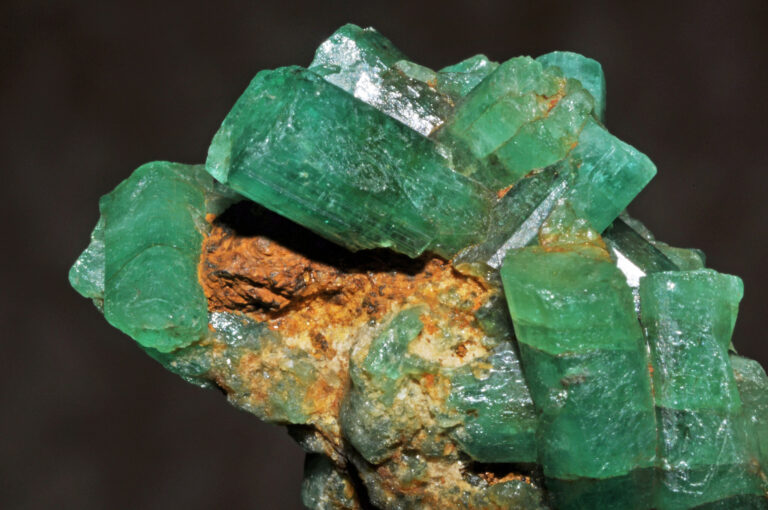
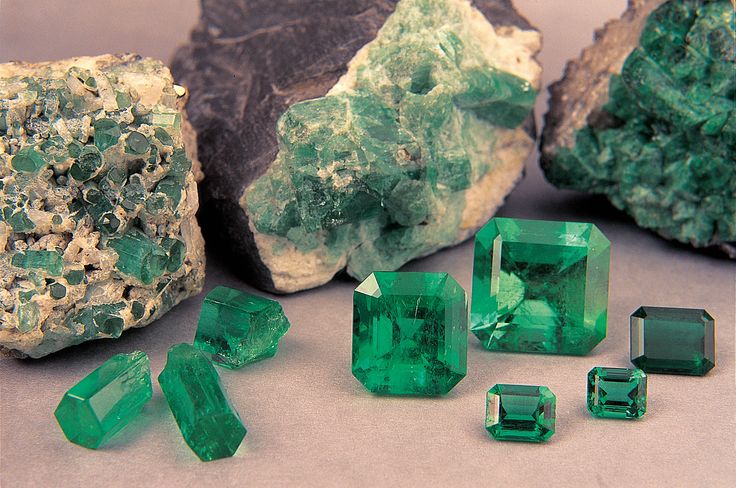
The reason is geological. An emerald is a variety of beryl — a mineral that exists in many parts of the world. But for a beryl crystal to become a true gemstone-quality emerald, chromium must embed itself into its structure during formation. This combination is extraordinarily rare. When chromium content is too high, as tends to happen with African and Brazilian stones, the result is a deep, dark green that absorbs light rather than playing with it. Colombian emeralds hit the sweet spot: enough chromium to produce a vivid, luminous green, but not so much that it kills the stone’s inner fire.
The finest stones in the world come from Muzo, a mining town in the Boyacá region, reached by a road so poor it becomes nearly impassable in rainy season. It is from these mountains that the world’s most coveted gems emerge.

The Stone Itself: What Makes an Emerald Valuable
Technically, an emerald is judged on four main criteria:
Size — measured in carats, where one carat equals 0.2 grams. As with diamonds, price per carat increases dramatically with size.
Color — the intensity and purity of the green, driven primarily by chromium content. Too little and the stone looks pale, almost white. Too much and it turns opaque and dark.
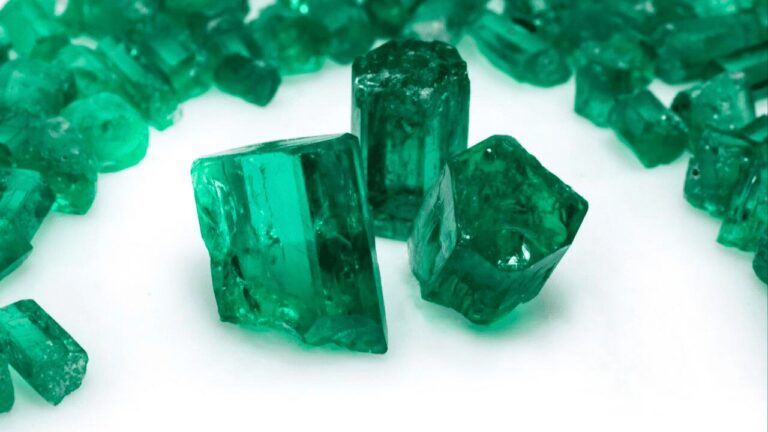
Transparency — the single most important factor. An almost opaque emerald is relatively common and nearly worthless as a gem. A truly transparent stone that allows light to travel through and reflect back is extraordinarily rare.
Inclusions — the so-called jardín, or “garden” of the emerald. These are mineral particles trapped inside the crystal as it formed from liquid state in the rock. Here lies one of the great paradoxes of the emerald world: inclusions are necessary proof that a stone is natural and authentic, yet too many destroy its transparency and value. The ideal emerald carries just enough of its garden to authenticate itself without compromising its beauty.
If inclusions are visible to the naked eye without a magnifying glass, the stone is worth almost nothing. In the right balance, they are what make each emerald unique — no two are ever identical.

The Street Where Billions Change Hands
The global hub of the emerald trade is a nondescript stretch of Avenida Jiménez de Quesada in central Bogotá, next to the Emerald Trade Center building. What happens here is unlike anything else in the commodity markets of the world.
Every weekday, from morning to evening — with a break for lunch, like any office — dozens of men known as comisionistas (brokers) gather on the pavement in small clusters of three to five people. Each carries emeralds wrapped in small white paper folds. Deals are struck in the open air, stones examined with a loupe, prices negotiated in low voices. Money moves through the DaVivienda bank branch across the street — but not the stones. No comisionista crosses the street with emeralds in hand. The gems stay on one side; the cash comes back.
It sounds improbable, yet this hundred-metre stretch of sidewalk is, according to insiders, the safest zone in the entire country. Nobody dares touch it. The emerald trade has its own unwritten law, and it is enforced not by police but by reputation.
The Currency of the Market: Trust
This is perhaps the most striking feature of how the emerald market functions: it runs entirely on trust and oral agreements.
The comisionistas form a closed circle. They have known each other for years, often decades. Many come from Boyacá or have family in the mining regions who supply them directly. Breaking your word — agreeing to buy or sell a stone and then backing out — means permanent exclusion from the market. As one veteran exporter put it: “Many times I have regretted a purchase I made, but when you accept a deal, you must honor it.” There are no written contracts. There are no lawyers. There is only your word, and in this market, that is everything.
The Chain: From Mine to Market
The emerald trade involves several distinct layers, each playing a critical role.
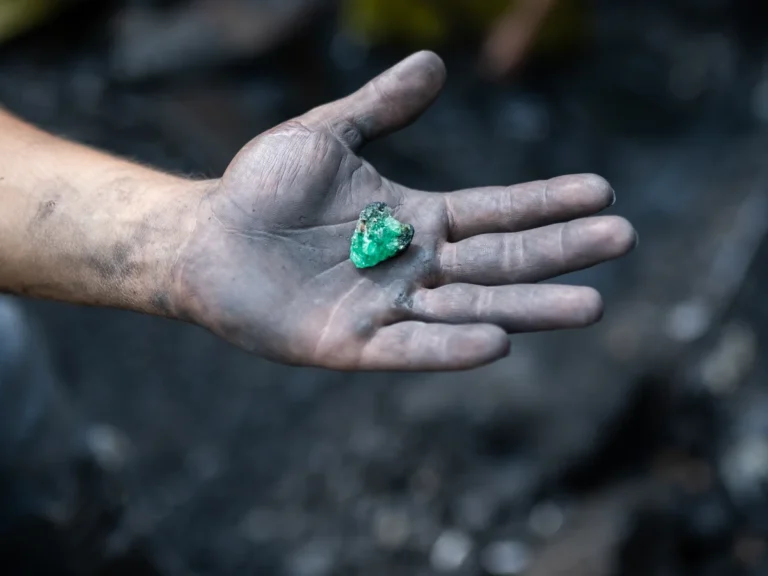
The Miners — at the base of the chain, many work informally. A practice called rebusque — where miners keep small stones they find as a form of unpaid compensation — has historically been part of the unspoken agreement between workers and mine owners. With increasing pressure from international buyers, this informal culture is slowly evolving.
The Cutters (Talladores) — skilled artisans who transform rough stones into finished gems. A great cutter doesn’t simply follow a formula; they “read” each raw stone to determine the best possible shape, minimising waste while maximising beauty. The process uses a diamond-tipped disc and constant water cooling. At minimum, 60% of a rough emerald is lost in cutting. A good cutter also knows that the mineral inclusions within the stone — the same ones that prove its authenticity — can cause it to split if cut incorrectly. Apprentices learn their craft on quartz, since it shares emerald’s hardness without the risk.
The Comisionistas — the street brokers who form the beating heart of the market. Their day functions like a trading floor: some days nothing moves, other days a single large international order sweeps up everything available. The tactics are not unlike those of any financial market — controlling supply to push prices up, timing large releases for maximum advantage.
The Exporters — buyers who receive orders from international clients and negotiate with comisionistas to fulfill them. They rent offices inside the Emerald Trade Center, where deals struck verbally on the street are concluded in private meeting rooms.
The Gemological Institute — for significant stones, buyers can request a formal certificate detailing a stone’s exact characteristics and composition. This certification costs around $200 and is worth it for high-value gems.
The Shadow Over the Market: Narco and Violence
No honest account of the Colombian emerald trade can ignore its darker history. The same Boyacá region that produces the world’s finest gems also witnessed what locals call the “green war” — armed conflict between rival emerald lords that left hundreds dead. The most infamous figure was Víctor Carranza, known as the “Czar of Emeralds,” who controlled 60% of the country’s production and survived multiple assassination attempts before dying of cancer. His rival, Rodríguez Gacha — Pablo Escobar’s partner, immortalized in the Netflix series Narcos — also operated in the emerald zones.
The presence of narco networks has historically prevented the transparency that any functioning market needs: reliable pricing, buyer confidence, and legitimate deal-flow. Even at the time of writing, the sector has not fully escaped its violent past.
The Push Toward Transparency
The tide, however, is turning — slowly but meaningfully.
The acquisition of Carranza’s mining empire by Minas Texas Colombia (MTC), led by American businessman Charles Burgess, marked a turning point. As a company with operations worldwide — for whom emeralds represent barely 1% of total revenue — MTC has strong incentives to maintain international credibility. Under pressure from luxury brands like Louis Vuitton, which demanded guarantees against child labor at international emerald congresses, the sector has begun implementing proper labor and supply chain standards.
MTC’s processing arm, Esmeraldas de los Andes (EDLA), operates the largest and most modern emerald cutting facility in the world. Its flagship initiative is a “mine to market” traceability system — tracking every stone from the moment of extraction through cutting, certification, and sale. As Burgess has stated, this is about giving the end consumer a guarantee that their gemstone was produced legally and ethically. MTC is also the only company authorised to operate through Colombia’s free trade zone, where cutting takes place tax-free and rough stones are transformed into finished gems that can multiply their value by five to ten times before export.
The World’s Greatest Emeralds
Locked in a bank vault in central Bogotá for more than fifteen years are the two most extraordinary emeralds ever found.
Fura — at 11,000 carats (over two kilograms), the largest emerald on earth.
Tena — at 2,000 carats, the most valuable emerald in the world, estimated at around $22 million.
Both were named after figures from Muisca legend — two princes who loved each other and died in the Andean mountains long before the Spanish arrived. Both belonged to Víctor Carranza, and both were sold to MTC as part of the 2013 acquisition of his empire.
Among history’s most celebrated emerald pieces is the Crown of the Andes — forged from two and a half kilograms of gold set with 453 emeralds totaling over 1,500 carats, including a stone believed to have come from the necklace seized from the Inca emperor Atahualpa by Francisco Pizarro. It now resides in the Metropolitan Museum of Art in New York. More recently, a crown belonging to Swedish princess Caterina Henckel, set with 101 carats of Colombian emeralds, sold at Sotheby’s in 2011 for $12 million.
A Market Unlike Any Other
What makes the emerald market so remarkable is precisely what makes it so fragile: it is a world built on personal relationships, oral tradition, and centuries of accumulated trust operating alongside very modern pressures — international compliance standards, luxury brand ethics requirements, and the unstoppable push for supply chain transparency.
The comisionistas still gather on their sidewalk each morning, stones folded in white paper, conducting one of the world’s oldest commodity trades in the open air of a South American city. But increasingly, the stones those men carry are embedded in systems of traceability, certification, and global accountability that Víctor Carranza could never have imagined.
Green gold is cleaning itself up — one stone at a time.